How to Choose a Compact Outdoor Dining Set for Small Spaces
Key Takeaways
- Measure before you shop: A compact dining setting needs 60–80cm of clearance behind each chair, plus adequate doorway and lift access—since what works on paper doesn't always work in practice.
- Choose the right shape: Round and square two and four-seater tables are the most space-efficient shapes, while slim rectangles suit long, narrow balconies.
- Match materials to your setup: Lightweight aluminium works best when furniture needs to be moved or stored, while teak and synthetic wicker suit setups that stay outdoors year-round.
- Opt for space-savers: Stackable chairs, folding chairs, extendable tables, and bench seating allow small spaces to adapt easily between everyday use and entertaining.
- Style strategically: Light colours, vertical planting, and layered textures open up a compact area visually without taking up extra physical space.
Introduction
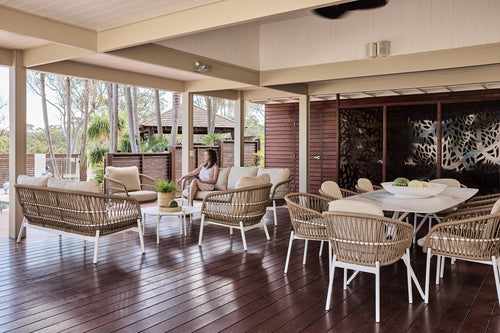
Knowing how to choose a compact outdoor dining set for small spaces means working backward from what you actually have, rather than what you wish you had. Australian apartments, townhouses, and inner-city homes increasingly feature balconies, courtyards, or small patios rather than sprawling backyards. Fortunately, the outdoor furniture market has caught up, offering well-designed compact options that don't compromise on quality or comfort.
This guide covers the five practical decisions that matter most: measuring your space accurately, picking the right shape and size, choosing suitable materials, finding space-saving features, and styling the final look for maximum impact.
1. Measure Your Space Before You Shop
A measuring tape solves more problems than online photos ever can. Before shopping, measure the exact dimensions of the designated area, making sure to account for clearance around the furniture.
- Chair Clearance: A dining chair needs 60–80cm of clearance behind it to be pulled back comfortably without hitting a wall, planter, or balcony railing.
- Overall Footprint: A round four-seater table with adequate clearance requires roughly 2.4m x 2.4m of floor space, while a two-seater bistro setting needs around a 1.6m x 1.6m to 1.8m x 1.8m footprint for comfortable seating.
- Access Points: Don't forget doorways and lifts. Larger table frames sometimes cannot fit through narrow apartment entryways or lifts in one piece, so look for sets with knock-down (demountable) legs if access is tight.
- Sunlight and Shade: Take note of where the sun lands when you plan to use the area. An umbrella’s shade arc shifts throughout the day, so a setting that is sunlit at lunch may end up in deep shade by mid-afternoon—particularly on east- or west-facing balconies.
2. Pick the Right Shape and Size
Shape matters far more in small spaces than in large ones.
- Round Tables: Fit comfortably into tight spaces and let four people sit together without sharp corners blocking walkways. They also work exceptionally well in courtyards where ease of movement around the table is a priority.
- Square Tables: Suit symmetrical balconies and complement courtyards with matching square planters or paving.
- Slim Rectangles: Provide the best fit for long, narrow balconies where a round or square table would consume too much floor depth.
Choosing Seating Capacity
- Two-Seater Sets: Ideal for typical apartment balconies, usually featuring tables sized around 60–80cm across.
- Four-Seater Sets: Require a table around 90–120cm across, depending on whether it is round or square. Most compact four-seater configurations use a round shape to preserve surrounding walkway space.
3. Choose Materials Built for Small Outdoor Settings
Small outdoor settings often cannot be easily stored away, making material durability even more crucial than for a large backyard set that can be rolled under cover. The three materials best suited to compact outdoor dining are:
- Lightweight Aluminium: The lightest option available, making it easy to move when you need to free up floor space. Marine-grade powder-coated aluminium is ideal for coastal apartments exposed to constant salt spray.
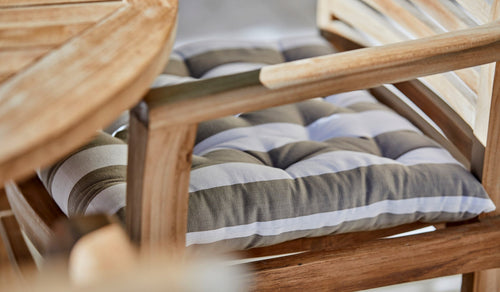
- Teak: Excellent for courtyards where the furniture stays put year-round. Teak’s natural weather resistance handles outdoor exposure with minimal upkeep, and its warm timber tone complements enclosed spaces.
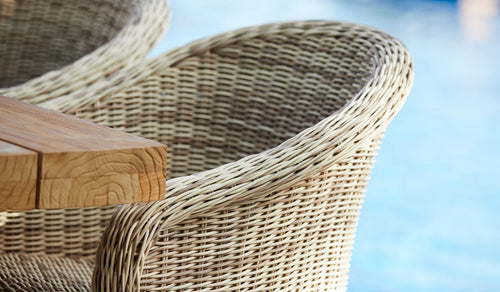
- Synthetic Wicker: Woven over an aluminium frame, this is the lowest-maintenance option for unsheltered balconies. Because woven pieces can be bulky to store, they are best chosen when the setting will stay outside year-round in all weather.
4. Look for Space-Saving and Multi-Functional Features
Small spaces perform best when individual pieces serve more than one purpose or adapt on demand:
- Stackable Chairs: Can be neatly tucked away in a corner when not in use, freeing up floor space for plants, play, or relaxing.
- Folding Chairs: Collapse flat against a wall, making them ideal for occasional dinner parties when you need extra seating without a permanent footprint.
- Extendable Tables: Offer the ultimate space-saving solution. A table that seats two to four on weekdays and extends to seat six on the weekend is far more practical than a large permanent setting dominating the space all week.
- Bench Seating: Positioned against a wall, a bench offers versatile seating that doubles as a surface for drinks or serving platters.
- Nesting Side Tables: Stack into a single footprint when unused and separate easily when extra surface area is needed.
5. Style Compact Outdoor Dining for Maximum Impact
A few simple styling choices can make a small outdoor area feel considerably larger than its physical measurements suggest:
- Light Colours: Cushions, umbrellas, and accessories in shades like bone, sand, and pale timber reflect light to visually open up the area far better than dark charcoals or deep greens.
- Vertical Planting: Wall-mounted planters, climbing vines, or stacked herb gardens utilize vertical height rather than precious floor space, leaving more room for your dining setup.
- Soft Lighting: Overhead string lights or small table lamps make a compact balcony or courtyard welcoming into the evening without crowding the area with floor lamps.
- Layered Textures: Incorporating a woven rug, soft cushions, and smooth ceramic planters adds visual depth without taking up extra square metres.
Frequently Asked Questions
What is the smallest outdoor dining set available?
The smallest practical outdoor dining set is a two-seater bistro setting, which typically features a 60–80cm round or square table and two chairs. Including chair clearance, the total footprint ranges between 1.6m x 1.6m and 1.8m x 1.8m—fitting comfortably on most Australian apartment balconies. Anything smaller tends to feel too cramped for actual dining.
What size table fits on a small balcony?
For most Australian apartment balconies (offering around 4 to 8 square metres of usable space), a two-seater bistro table measuring 60–80cm across fits comfortably. A four-seater setting is generally only practical on larger balconies of 9 square metres or more, where chair pull-out won't obstruct walkways. Always measure twice before purchasing.
Are foldable outdoor dining sets worth it?
Yes—especially for renters and apartment dwellers. Foldable and stackable sets allow you to easily reclaim floor space for other uses (such as drying laundry or relaxing) and make moving day much easier. While they can sometimes feel slightly less substantial than fixed furniture, high-quality folding sets with premium hardware bridge that gap nicely.
Find Your Small-Space Outdoor Dining Set at Woodbury
Woodbury is an Australian family business with Sydney showrooms in Castle Hill and Caringbah. We offer a dedicated range of compact pieces specifically designed to suit Australian apartments, courtyards, and small patios.
Browse our full outdoor dining sets range online, or explore our curated balcony furniture collection to find pieces sized for narrow outdoor spaces. Enjoy nationwide shipping and a 30-day satisfaction guarantee on every order.