How to Choose Outdoor Furniture for Your Home
Key Takeaways
- Plan around your space first. Measure the area, leave 60-80cm of clearance around chairs, and think about how you'll actually use it.
- Match the material to Australian conditions. Teak, powder-coated aluminium, synthetic wicker and rope each handle our weather differently.
- Comfort matters more than people expect. Test seat depth, backrest angle and cushion support before you commit.
- Budget for the long run. A well-built outdoor setting can last 15 years or more, where a cheap one usually needs replacing within three.
- Build a care routine. A few hours a year of maintenance and the right care products extend the life of every material on the market.
Introduction
Outdoor furniture is a long-term decision. The right pieces should still be hosting Sunday lunches a decade from now, not heading to the tip after three summers. Knowing how to choose outdoor furniture comes down to five practical questions: what types of furniture suit your needs, how big your space is, which material will last in Australian conditions, what style and comfort level you want, and how much you should spend.
This guide walks through each step so you can buy with confidence, not guesswork. By the end you'll know what to look for, what to budget, and what to keep doing once it's home.
Know What's on Offer Before You Choose
Before you start shopping, it helps to know what's actually out there. Outdoor furniture splits into a handful of categories, and each one solves a different problem in the way you'll use the space.
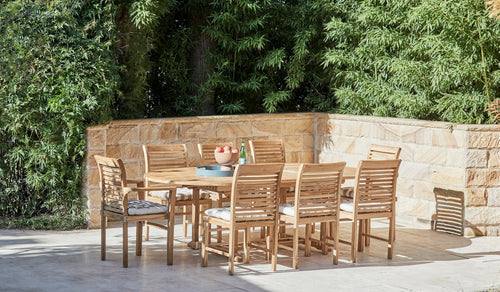
Outdoor dining sets are the centrepiece of most patios and courtyards, sized for the number of people you typically eat with: four-seaters cover most households, six and eight-seaters suit larger families and entertaining. Outdoor lounges are built for unhurried afternoons rather than meals, often deep-seated with weather-resistant cushions for long stretches in the sun or shade. Outdoor chairs work on their own around a small table, on a balcony, or grouped near a fire pit for cooler evenings.
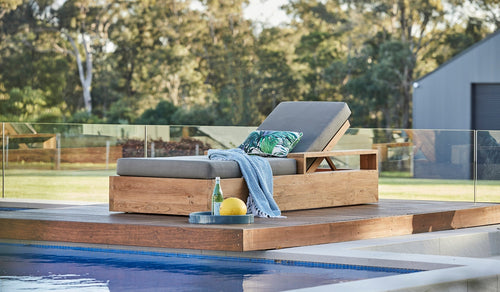
Outdoor tables, benches and sun lounges cover more specific uses, and outdoor accessories like cushions and umbrellas tie everything together. If you'd rather see the full outdoor furniture range and filter by category, material or size, that's a faster route than scrolling category by category.
Start With Your Space and How You'll Use It
Measure before you shop. A dining set needs at least 60-80cm of clearance behind each chair so people can push back without hitting a wall or planter. A lounge setting needs room to walk around without barking your shins on a coffee table. A standard four-seater dining setting needs roughly 2.5m x 3m of usable space once you account for chair pull-out.
Sketch the space, mark doorways, and note where the sun lands at the times you'll use the area. An umbrella's shade arc shifts through the day, so what works at 1pm may put you in full sun by 4pm.
Use case matters more than total square metres. A two-seater bistro setting from the balcony furniture range is sized to fit narrow apartment outdoor spaces, where a six-seater dining set from the patio furniture collection assumes you've got real room to move and entertain. Picking the wrong scale for the space is the most common buying mistake we see.
Choose a Material That Suits Australian Conditions
Australian weather is hard on outdoor furniture. UV is fierce, storms come on fast, and coastal salt corrodes anything not built for it. Match the material to the conditions, not just the look. Four materials cover most quality outdoor furniture on the market: teak, synthetic wicker, aluminium and rope.
Teak outdoor furniture is the long-standing benchmark for hardwood settings, and has been used everywhere from ship decks to garden benches for centuries. Teak's natural oils resist water, insects and rot, and it weathers to a soft silver-grey if left untreated, or stays a warmer honey colour with annual oiling. Reclaimed teak, salvaged from old Indonesian buildings and bridges, gives the same durability with more characterful grain and a second life for the timber.
Wicker outdoor furniture made from synthetic wicker (a UV-stable polyethylene resin) woven over an aluminium frame handles sun and rain well and needs almost no upkeep. It's the easiest material to live with year-round, and the alloy frame means it won't rust even if the cushions get caught in a downpour.
Aluminium outdoor furniture is the lightest option, won't rust, and suits modern homes with clean architectural lines. Aluminium with a quality powder-coat finish is a strong choice within a few kilometres of the coast, where it resists salt corrosion well.
Rope outdoor furniture is the newer entry. Outdoor-grade rope woven over an aluminium frame gives a softer, more tactile feel than wicker and works particularly well on chairs and lounges where you'll have skin contact with the weave.
Get the Style and Comfort Right
Outdoor furniture should match the look of your home rather than fight it. Hamptons homes lean toward soft whites, weathered timbers and rope textures. Modern homes pair well with aluminium frames and clean lines. Coastal and country homes suit warmer timbers and natural weaves.
Comfort decides whether you'll actually use the space. Sit in the chair before you buy. Check seat depth (45-50cm is the comfort zone for dining; deeper for lounging), backrest angle, and whether cushions support your lower back. Fabric quality matters as much as the frame: solution-dyed acrylics like Sunbrella resist mildew and fading season after season. If the frame is sound but the original cushions have given up, a set of replacement outdoor chair cushions is the cheapest way to refresh a setting without buying new.
Plan Your Budget, Quality and Long-Term Care
Outdoor furniture is a long-term decision, so think in cost-per-year, not price tag. A cheap setting that lasts two summers and ends up at the tip is more expensive over a decade than a quality setting that lasts 15 years. Build well once, and the same pieces are still bringing the family together when the kids have kids of their own.
When comparing prices, look at the details. Joinery (mortise-and-tenon vs glued butt joints), hardware grade (stainless steel vs zinc-plated), and fabric specification separate furniture that lasts from furniture that doesn't. Stainless steel screws, hardwood frames and UV-stable fabrics cost more upfront and pay back with years of extra use.
Care is the other half of the equation. Most outdoor furniture lasts longer with a wipe-down every few weeks, a cover in storm season, and occasional maintenance suited to the material: oiling teak once a year, rinsing salt from aluminium in coastal areas, brushing dust out of wicker weaves before it sets. Keeping a few outdoor furniture care accessories on hand (protectors and cleaners) turns the routine into a 30-minute job rather than a Saturday.
Frequently Asked Questions
What is the most durable outdoor furniture material in Australia?
Teak and powder-coated aluminium are the two most durable materials for Australian outdoor conditions. Teak's natural oils resist rot, insects and water without treatment, while powder-coated aluminium resists corrosion well, even close to the coast. Synthetic wicker woven over an aluminium frame is a strong runner-up for low-maintenance durability.
How much should I spend on outdoor furniture?
There's no single right number, but treat outdoor furniture as a long-term investment rather than a seasonal purchase. Quality outdoor furniture is priced by size, material and construction, so compare the cost per year over its lifespan rather than the price tag alone. Cheap sets typically need replacing within two to three years, which works out more expensive over a decade than buying once at the quality tier.
Can outdoor furniture stay outside all year?
Quality outdoor furniture made from teak, synthetic wicker, powder-coated aluminium or rope is built to live outside year-round in Australian conditions. A few simple habits extend lifespan considerably: stowing lightweight pieces before storms, storing cushions when not in use, and rinsing salt from frames in coastal areas. Our guide on how to protect outdoor furniture from Australian weather covers each threat in detail.
Find Your Outdoor Setting with Woodbury Furniture
Woodbury is an Australian family business that has been designing and crafting outdoor furniture for local homes for over 15 years. Every piece is crafted for life, with Sydney showrooms in Castle Hill and Caringbah, nationwide shipping, and a 30-day satisfaction guarantee so you can be sure it fits the space and the way you live. Browse the outdoor furniture range online, or get in touch with the team for advice tailored to your home.